Apple’s recent announcements around renewables and supply chain transparency, put the major cloud providers to shame.
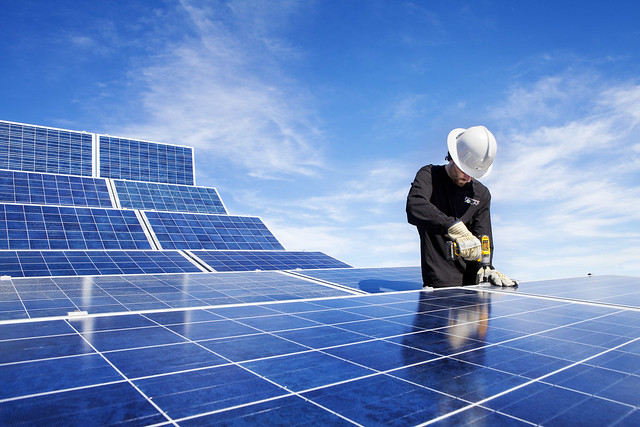
Apple had a couple of interesting announcements last week. The first was that they were investing $848m in a 130MW solar farm being built by First Solar in California. With this investment, Apple enters into a 25 year power purchase agreement with the solar farm, guaranteeing income for the solar farm, and securing Apple’s energy bills for the next 25 years in California. According to First Solar this is the largest agreement in the industry to provide clean energy to a commercial end user, and it will provide enough energy for Apple to fully power its headquarters, operations and retail stores in California, with renewable energy.
For it’s data centers, which hosts Apple’s iCloud, App Store, and iTunes content, Apple uses 100% locally generated, renewable energy. It’s Maiden, North Carolina data centre, for example, uses a combination of biogas fuel cells and two 20‑megawatt solar arrays — the largest privately owned renewable energy installation in the US, according to Apple. And it is now investing another $55 million in a third, 100-acre 17.5MW plant for the facility. You can find details of Apple’s other data centre facilities, and how they are powered by renewables, here.
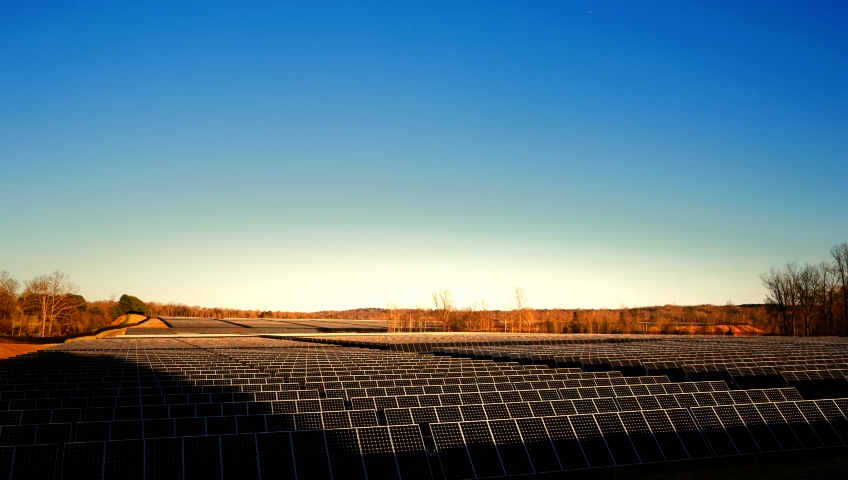
Apple’s Maiden NC Data Center Solar Array
The second announcement from Apple was the publication of its 2015 Supplier Responsibility Progress Report (highlights here, full PDF here). Apple has been criticised in the past for workers rights violations in its supply chain, so it is good to see Apple taking very real steps, positive, to address this. The amout of detail, the steps taken, and the levels of transparency in the report are impressive.
On underage labour, for instance, Apple’s policy requires that
any supplier found hiring underage workers fund the worker’s safe return home. Suppliers also have to fully finance the worker’s education at a school chosen by the worker and his or her family, continue to pay the worker’s wages, and offer the worker a job when he or she reaches the legal age. Of more than 1.6 million workers covered in 633 audits in 2014, 16 cases of underage labor were discovered at six facilities — and all were successfully remediated.
Apple also has strict policies around work week hours, health and safety, sourcing of conflict minerals, and the environment. In order to increase its transparency, Apple publishes its Supplier Code of Conduct, its Supplier Responsibility Standards, its Conflict Minerals Standard, as well as a list of its smelter suppliers and its top 200 suppliers amongst other documents. And Apple’s comprehensive list of environmental reports are published here.
What does this have to do with cloud computing and the enterprise supply chain management?
Well, Apple recently partnered with IBM in order to expand its userbase into the enterprise space. And it has opened its iWork office suite to anyone with an Apple ID, no Apple device required – though this was long overdue.
Comparing Apple’s cloud offerings to actual enterprise cloud players (or any cloud players, for that matter), you see there’s a yawning chasm in terms of transparency, reporting, and commitment to renewables.
Of the main enterprise cloud players:
- Microsoft publish their Citizenship Report here [PDF]. And while it is a decent enough report, it doesn’t go into anything like the level of detail that Apple does. On page 53 of this report Microsoft mention that 47% of the energy it purchases is renewable. It does purchase renewable energy certificates for the other 53% so it can report that it is carbon neutral.
- Google doesn’t produce a corporate sustainability report. Instead it has this page which outlines some of the work it does in the community. Information on Google’s energy breakdown is sparse. What is published is found on the Google Green site, where we find that although Google has many investments in renewable energy, and Google has been carbon neutral since 2007, Google’s actual percentage of renewables is only 35%.
- IBM has a good history of producing corporate reports (though it still hasn’t published its report for 2014). However on the energy conservation section of IBM’s corporate report, IBM reports that sources 17% of its electricity came from renewable sources in 2013. However, they go on to note that this does not include the energy data of Softlayer – IBM’s cloud platform.
- And finally, Amazon, who have arguably the largest cloud computing footprint of any of the providers, is the worst performer in terms of reporting, and likely in terms of emissions. The only page where Amazon mentions emissions, claims that it has three carbon neutral regions, but fails to say how they have achieved this status (or whether they are third party audited as such). The same page also claims that “AWS has a long-term commitment to achieve 100% renewable energy usage for our global infrastructure footprint” but it fails to give any time frame for this commitment, or any other details on how it plans to get there.

Taking into account last November’s historic deal between the US and China on carbon reductions, and the upcoming Paris Climate Change Conference in December this year (2015), where there are very likely to be binding international agreements on carbon reductions. This will lead inevitably to increased requirements for CO2 reporting from the supply chain.
With that in mind, including the % renewable energy as one of the factors when choosing a cloud provider, would be a very wise move.
UPDATE:
As pointed out to me on Twitter:
https://twitter.com/OhMeadhbh/status/568132756762271744
In that case, you could always go with GreenQloud. GreenQloud bill themselves as a drop-in AWS replacement and being based in Iceland their electricity is 100% renewable.
Photo credit NAIT