I don’t get it. Really, I don’t.
Climate change is destroying the planet. Oceans are becoming warmer and more acidic, the glaciers and polar ice caps are shrinking faster then even the most pessimistic projections, South Sea islands like the Maldives are becoming inundated by sea level rise and we are in the middle of a man-made mass extinction event where scientists predict that one-half of all species of life will be extinct by 2100.
This is all pretty horrific to contemplate, right?
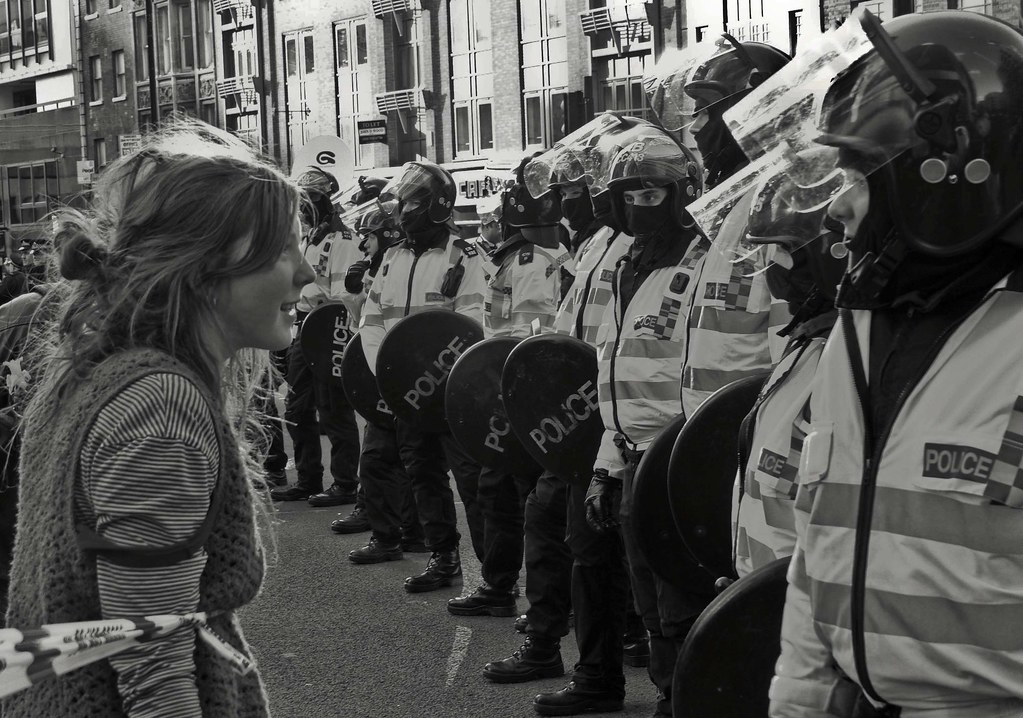
And yet, when people try to protest peacefully against the polluters who are damaging the planet beyond all recognition, when people try to highlight and bring a halt to this madness so we can save some shred of our decency, as well as some of the lifeforms on the planet, what happens? They are confronted by lines of police in riot gear, at best, or battered and thrown in jail on trumped up charges, or worse.
Look up civil disobedience in Wikipedia and you see a photo of Gandhi! Other famous proponents of civil disobedience are Martin Luther King, Nelson Mandela and Henry David Thoreau.
Why then, when people are looking to better our planet and by extension our lives, are they attacked and frequently imprisoned by the police, the very force who are supposed to protect and serve us? Obviously it is not us whom the police are protecting and serving. Shame on them.
Then today, I see a report that the provincial government in Alberta, Canada is threatening to unleash its counterterrorism plan if activists continue using civil disobedience to protest the tar sands. No really.
From the report:
Canada’s tar sands will singlehandedly produce more greenhouse gas emissions than Denmark, Ireland, Austria or Portugal by 2020 if the development continues expanding at its current rate, according to a recent report written by award-winning business reporter Andrew Nikiforuk
However,
“We’re going to be working very closely with industry and our solicitor general will be reviewing all of the guidelines we have in place,” said a visibly irritated Premier Stelmach in early October.
Fred Lindsay, the solicitor general, went a step further, suggesting the province might use its counterterrorism plan against future protests.
Now people trying to protect life on this Earth are terrorists? Seriously, it should be the people extracting oil from the tar sands who are subject to counterterrorism plans, if anyone.
When will we see the forces of law and order arresting executives of mining companies for their lack of concern for human rights, or lack of concern for the planet?
Photo credit clearbrian